
Jefferson County Criminal Docket Searches
Start at the Nebraska JUSTICE one-time case search, the public statewide entry point. Pick Jefferson County. Then filter by court, criminal case type, year, and party name as details allow. The search is built around parties. The official help shows a last-name format that may add a first name, middle initial, and suffix for a person. Stored spellings vary, so search broad before assuming no record exists.
Jefferson is county number 33 in the state system. A case number copied exactly from a notice beats a name search. Expect statewide trial-court case records here, not an arrest list. What you get is the caption, charge information when public, and settings. Register of Actions entries appear too. Financial entries and any available images round it out.
- Open the JUSTICE search and acknowledge its terms before beginning a paid one-time search.
- Enter the party name, then choose Jefferson County and the likely court level.
- Use the criminal type and year filters only when they are known from the case papers.
- Open the matching result and read the Register of Actions in date order.
- Ask the responsible clerk for a specific public document or certified copy when the result lacks it.
The portal currently posts a $17 search covering up to 30 cases for three days. An older JUSTICE FAQ still lists $15, so confirm the live checkout amount before you pay.
Jefferson County Criminal Search Fields
Court type shapes any Jefferson County docket search. The official JUSTICE field demonstration walks through the search screen itself. County Court handles misdemeanors, traffic offenses, ordinance matters, and felony preliminary proceedings. District Court takes district-level felony work once a case is filed there or bound over. A common name pulls up too many hits. Narrow it with a year, case subtype, judge, or attorney when those details appear on the court papers.
Nebraska case-information services explains the access tiers. One is open to the public, one for subscribers, one tied to courthouse terminals. The one-time service covers a short-term docket search. For anything deeper, a courthouse terminal or the clerk of the responsible court is the fallback. Go there when a search comes up short or an image is unavailable.
Nebraska's juvenile-confidentiality statute sets out the confidentiality rules. Those rules shape this Jefferson County criminal docket record.
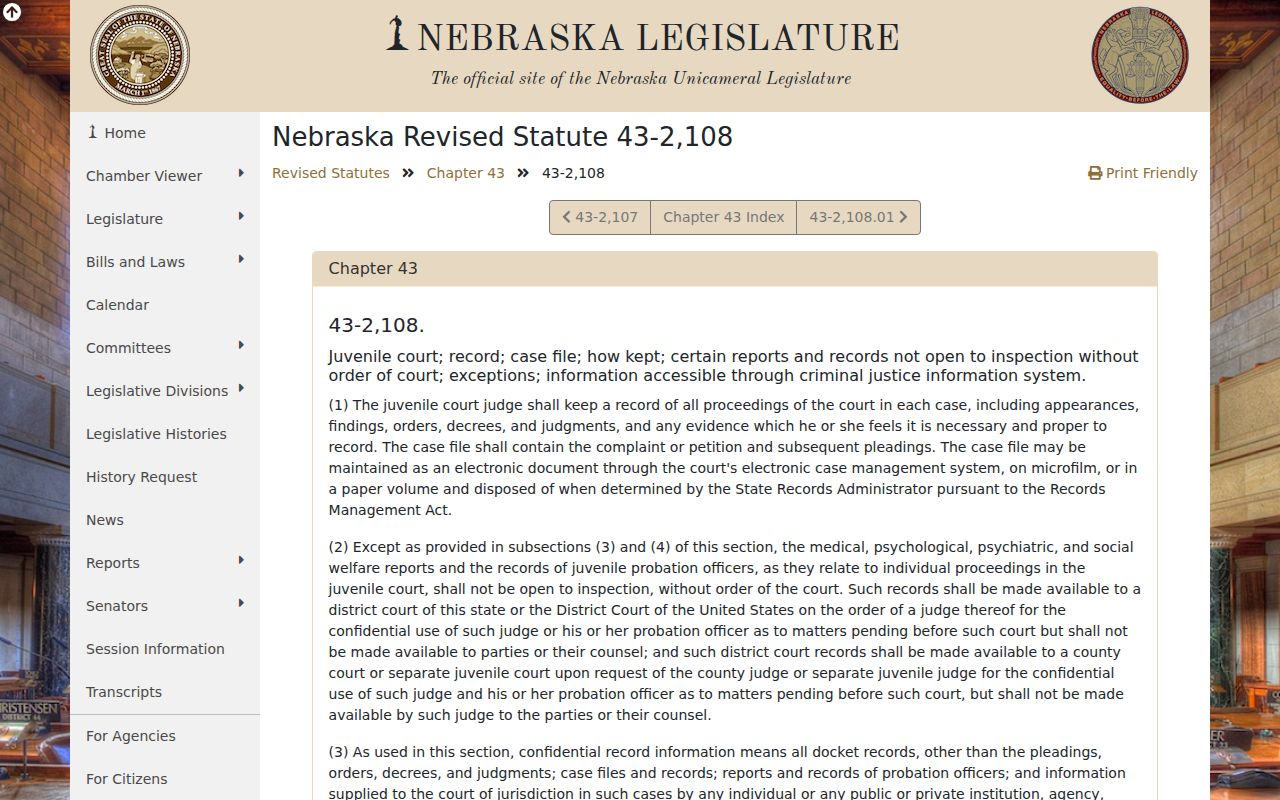
That statute explains why a statewide case search can leave out juvenile docket and file information even when the case number or court name is known.
JUSTICE data refreshes nightly, about every 24 hours. A brand-new charge or order may simply not have appeared yet.
Criminal Dockets: What They Show
A Jefferson criminal Register of Actions is a running list of court events. It is not a single verdict on any person. The public result can carry the court, caption, case number, judge, attorney, charge field, filing date, settings, disposition information, financial entries, and links to public documents. Read the exact item names. A filing entry is not a judgment, and an appearance setting is not a conviction.
| Case number | Uses court, county 33, case type, year, and identifier components, such as C33-CR-26-0000001 for illustration only. |
|---|---|
| Charge record | Shows the offense or classification as JUSTICE displays it, subject to public-access limits. |
| ROA entries | Chronological filings, notices, motions, orders, settings, and transmissions. |
| Plea and disposition | Records a plea, dismissal, judgment, sentence, or other outcome only when that entry is entered. |
| Financial entries | May show costs, fines, restitution, payments, balances, satisfaction, or bond-forfeiture entries when public. |
Not every filing comes with an image link. Public descriptions tie eligible electronic images to filings uploaded after April 16, 2008. A missing image link proves nothing about whether paper was filed.
Jefferson County Criminal Docket Courts
Nebraska County Court covers the County Court role in misdemeanor and traffic prosecutions in Jefferson County. That criminal docket also carries felony preliminary matters. The Jefferson County District Court holds the general-jurisdiction docket for district felony proceedings. The split matters in practice. A County Court preliminary hearing is not the final District Court disposition.
A felony can thus generate two linked but separate case histories. Find the bind-over or transmission entry in the County Court record. Then search District Court with the district case number. Do that if one is listed. Under the state FAQ, only District Court can impose incarceration exceeding one year. For structure, see the District 1 County Court judge listing. It gives the statewide court context behind Jefferson County criminal dockets.
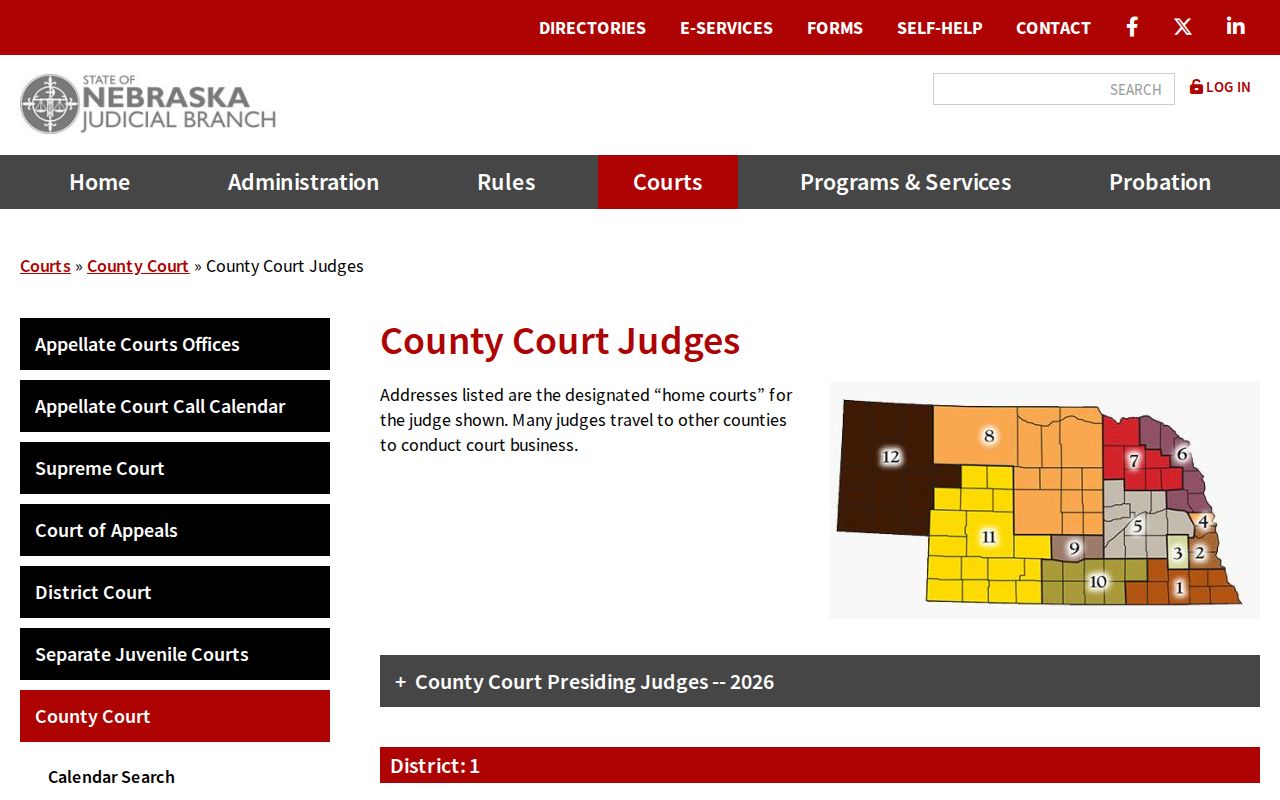
The judge directory maps the court structure. The case-specific event history comes from each Register of Actions for the Jefferson criminal matter you are tracking.
Jefferson County Criminal ROA Terms
Read the court's own wording, not a guess. Jefferson publishes no local glossary of ROA abbreviations, so do not expand shorthand labels on your own. The basic terms that follow describe ordinary record functions. They cannot predict what an entry means in a specific case.
- Information
- A formal criminal charging document filed by a prosecutor rather than a grand jury indictment.
- Arraignment
- A proceeding at which a charge is stated and a plea is entered or requested.
- Preliminary hearing
- A County Court proceeding that tests probable cause in a felony matter before district prosecution proceeds.
- Continuance or reset
- A move of a hearing or trial to a later setting; the later notice or order should be checked.
- Capias or warrant
- Court process directing law enforcement to bring a person before the court; it is procedural language, not a conviction.
The Jefferson County Court judge biography offers public court context, not a case-specific docket source.
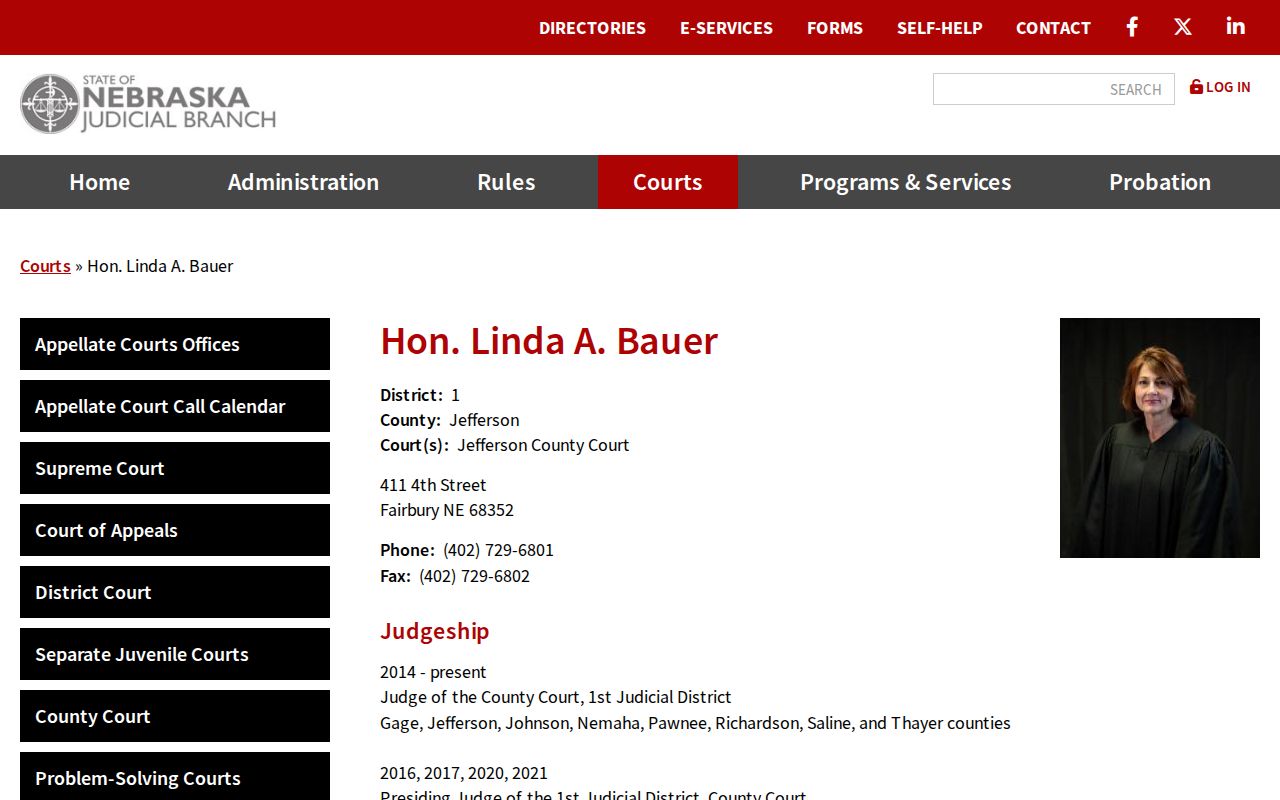
For a matter's current setting or outcome, trust the Register of Actions and the court's notices. A general judicial biography will not carry that answer for any Jefferson case.
Criminal Case Stages on the Docket
Not every criminal case follows the same path. The ROA still shows the court's sequence as it happens. A complaint, information, or other charge filing may come first. Arraignment, a plea entry, or motion practice may follow. A preliminary hearing, pretrial settings, trial, judgment, sentencing, review, or appeal can come later. Read every entry with its date and its court. A calendar date only proves a setting was scheduled, nothing more.
Docket flow: Filing → Arraignment → Pretrial → Plea or Trial → Disposition → Sentencing
A docket entry that says a case was filed is not a sign of guilt. Each label on a Jefferson County court docket marks a different step or result. Dismissed, nolle, deferred, acquitted, convicted, judgment, and sentenced all mean separate things. Bond and capias entries are procedural too. They are not rulings on the charge. When a case lists more than one allegation, read the record charge by charge.
Jefferson County Criminal Filing Context
Jefferson County filed 56 felony cases in County Court during FY2025. It added 143 misdemeanor or adult problem-solving cases, out of 800 adult County Court cases total. District Court saw 3 Felony 1 matters. It also had 34 Other Criminal matters among its 170 adult filings. Both sets of figures cover July 1, 2024 through June 30, 2025. These are filing counts, nothing more. They say nothing about guilt, pending inventory, or clearance rates. No single case outcome can be read from them. Treat the numbers as context for a criminal docket search rather than a scorecard.
Those figures matter because picking the right court is the first step in any docket search. They will not identify an individual criminal case for you. Nor do they make the two court dockets interchangeable, so confirm which Jefferson County court holds the case before you search.
Jefferson County Criminal Document Requests
A docket entry often names the paper behind it. That might be a charging instrument, a plea, an order, or a judgment. The ROA alone is rarely the whole file. Ask for the document the entry cites. Nebraska Form CC 3:29 collects the basics. It asks for court and county, case number, case name, document name and date, delivery preference, your contact details, and prepayment. Send it to the clerk who actually holds the case. Shawna Lindblad serves as District Court clerk. Mandy Klipp is the County Court Clerk Magistrate.
The County Court records rule covers public electronic records, terminal inspection, and copies. Both clerk counters sit at 411 4th Street in Fairbury. The responsible court keeps control of its own case file. Unsure which counter you need? Call County Court at (402) 729-6801 or District Court at (402) 729-6807 and confirm the right request method for your case.
CC 3:29 offers a menu of products: emailed or mailed, certified or noncertified. Once the form is done, route it to the responsible clerk. Then check whether Jefferson accepts that request by email, mail, or in person. Prepayment is required. The form sets no fixed local turnaround, so plan for some wait.
The official County Court rule page lays out the public-access framework. That framework governs any Jefferson County criminal court docket.
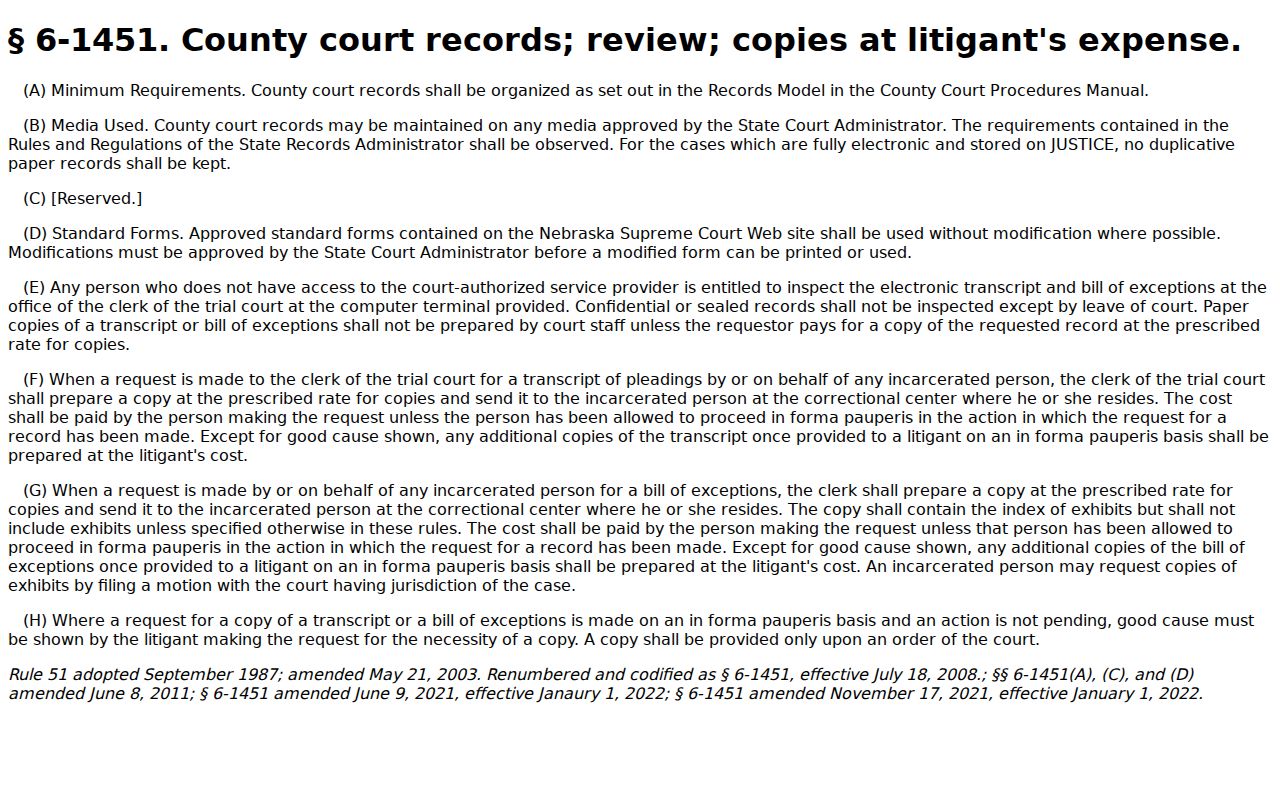
The rule allows terminal and clerk access to public material. A certified copy, though, is a product the clerk provides; it does not come from an online screen view.
Access Rules for Criminal Dockets
Public electronic court records can include indexes, case summaries, Registers of Actions, calendars, and available images, all subject to restrictions. A Jefferson County criminal record may be withheld or limited when it involves a sealed adult event, a juvenile case, a protected identifier, a restricted attachment, a statute, a rule, or a court order. Keep perspective on empty results. A missing public entry does not prove that no case exists; it may reflect a spelling issue, a recent entry, pre-JUSTICE history, a restriction, or retention status.
Key Nebraska access rules:
Nebraska Ct. R. §1-805 describes public electronic indexes, summaries, ROAs, calendars, and available images.
Neb. Rev. Stat. §29-3523 provides for sealing qualifying adult criminal-history events.
Neb. Rev. Stat. §43-2,108 generally makes juvenile dockets and case files confidential outside allowed access categories.
Nebraska's adult record-sealing information explains how sealing differs from expungement and points eligible people to the court-based route. A broader public-record request can go through the Nebraska Public Records Act process, which the court-record policy forwards to the State Court Administrator. That route still cannot override sealing or confidentiality.
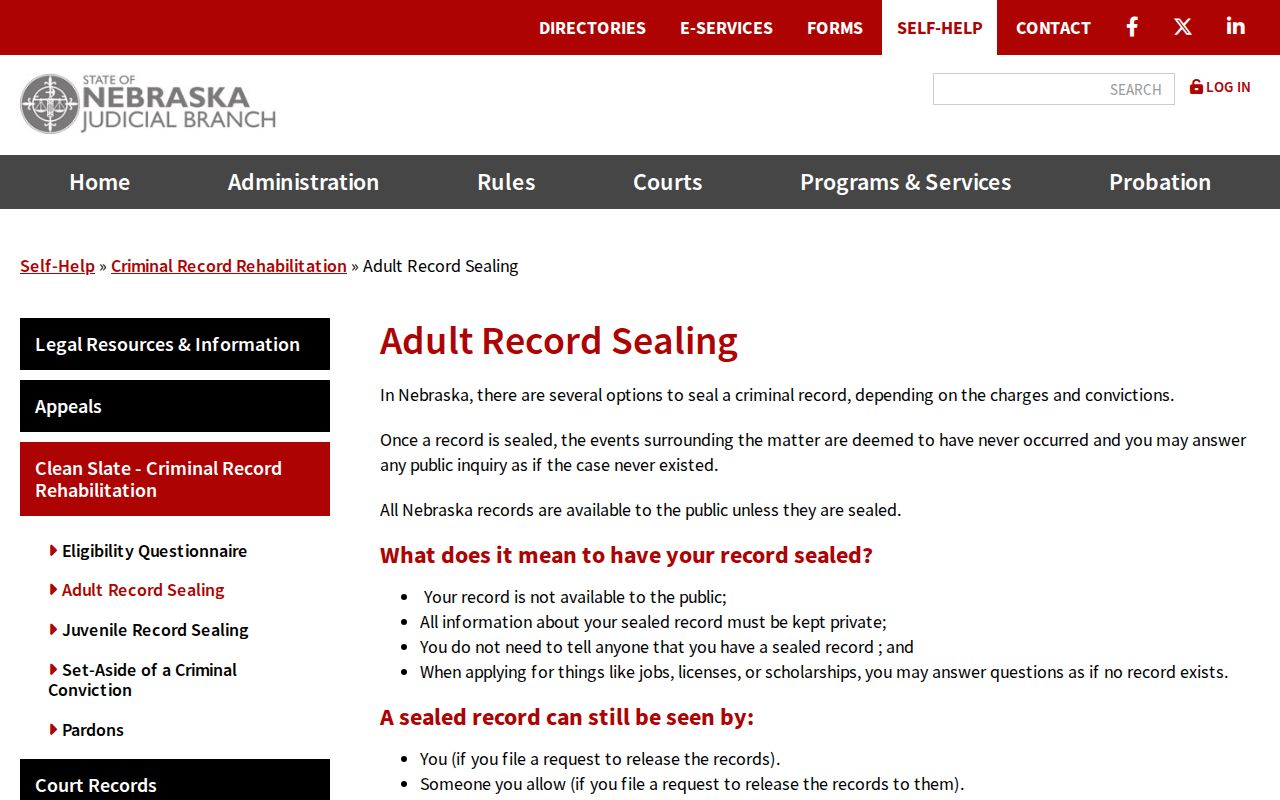
A sealing request runs through its own court process. A public criminal docket search will not resolve it.
Jefferson County Criminal Sealed Records
Adult sealing is about whether qualifying criminal-history information stays publicly available. That is a different question from asking for a public copy of a record. Juvenile files carry their own confidentiality rules. A public caption does not open every attachment inside a case. To obtain a sealed-record release, the court process may require the subject's request and valid identification. It may also require verification or notarization, plus a description of the documents sought. The adult-sealing statute sets the statutory access boundary.
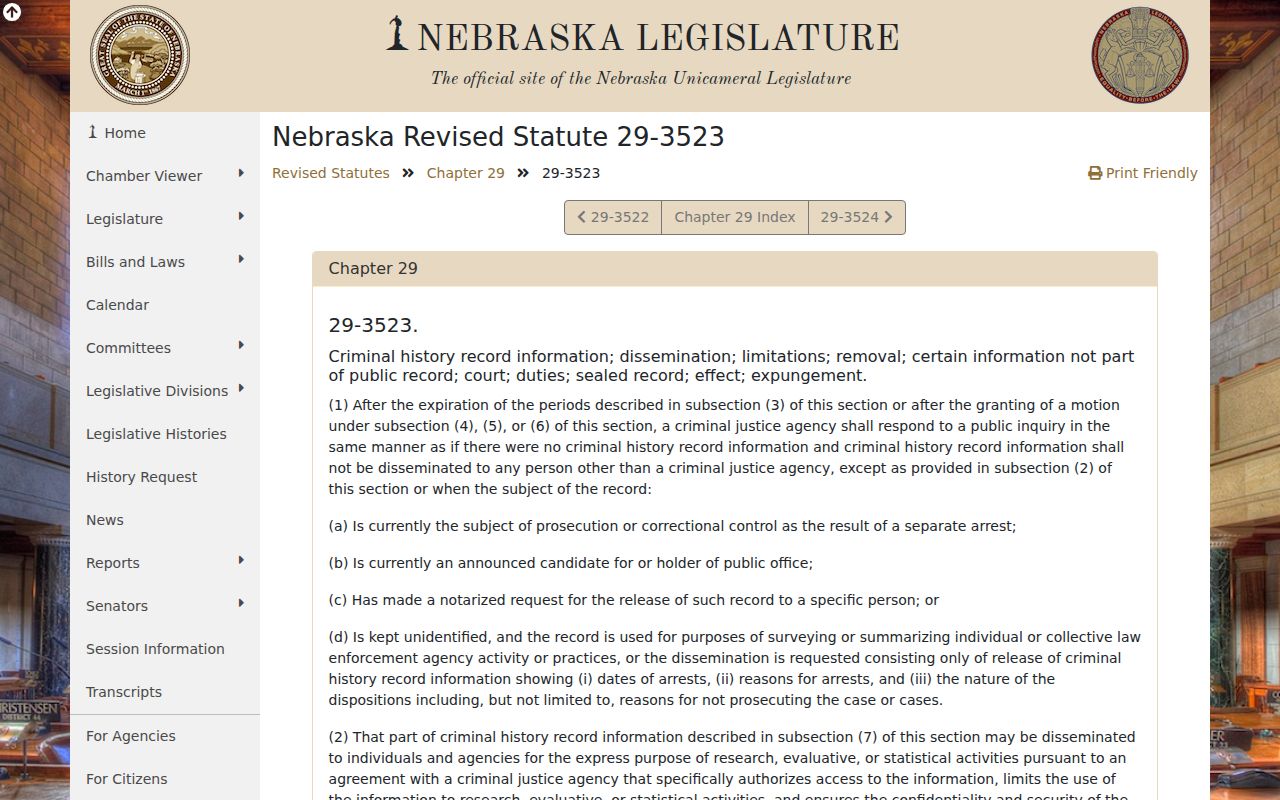
That statute is why a public Jefferson County criminal court docket can leave out an event that remains reachable only through authorized channels. To find a public case first, then request a document, see the county's Jefferson docket search information.